

AI can imitate a leader’s voice, but it cannot replace it because a leader’s voice is built through lived decisions, earned trust, and real accountability over time.
That distinction has been on my mind lately. Not from a marketing standpoint and not from a technical one, but from a leadership perspective. A leader’s voice is not just how they write or speak. It’s the way people recognize their judgment, their values, and their presence before they even finish a sentence. It’s the consistency behind their decisions and the weight behind their words.
Watching Bad Bunny headline the Super Bowl brought this into focus for me in an unexpected way. You could recognize him instantly, not because of production value or stage design, but because of identity. He carried culture, history, and lived experience onto that stage. Whether someone loved it or questioned it, it felt grounded in something real. That kind of presence does not come from pattern recognition; it comes from belonging somewhere first.

AI can replicate rhythm, it can mirror tone, it can follow patterns and generate language that sounds close enough to pass at a glance. What it cannot do is carry responsibility, it cannot absorb the consequences of a decision, it cannot build trust over years of showing up in rooms where outcomes matter.
A leader’s voice is not a writing style. It’s a record that reflects choices made under pressure, lessons learned the hard way, and a track record that people can point to. That is why imitation is not replacement.
Can AI Replicate Cultural Authority or Only Imitate It?
AI can imitate culture, but it cannot carry it, because culture is formed through lived experience and shared memory.
Culture shows up in the way you tell a story, how you hold eye contact, and how you move through a room. It gets shaped long before you ever open LinkedIn. If you grew up middle class in Texas like I did, you understand this instinctively. You learn it at Friday night football games, backyard BBQs, and conversations that have nothing to do with business strategy.

When Bad Bunny performed in Spanish on one of the biggest American stages of the year, it was not just a musical decision. It was a signal of belonging; it was identity in motion. That kind of authority is earned over time. It cannot be downloaded, scraped, or trained into a model. AI can analyze patterns and mirror humor, but it cannot inherit the rooms that formed you. It cannot carry the weight of community, memory, or history.
Is Language Just Sound, Or Is It Identity?
Language is identity because it reflects lived experience, community, and values.
There was a time when sounding professional meant sanding down personality. You were expected to flatten your accent, soften your humor, and fit a narrow definition of polish. Today it looks different, we are watching global stages embrace language that reflects real communities rather than filtering them.
Language carries emotion and memory. It carries the influence of parents, mentors, neighborhoods, and cultures. AI can model pronunciation and grammar. It can generate sentences that are technically correct. What it cannot do is feel what you felt or live what you lived. When people respond to your voice, they are responding to more than sound. They are responding to identity.
Can AI Recreate Human Energy and Real Connection?
AI cannot recreate human energy because real connection is built through shared experience and trust.
If you have ever been inside a Texas BBQ joint when the Longhorns are winning in the 4th quarter, you know what real energy feels like. It’s layered and emotional, it builds from shared history and shared moments. You do not manufacture it; you participate in it.

The same thing happens in business conversations. Real opportunity does not come from optimized output; it comes from resonance. I have built 6-figure opportunities from LinkedIn conversations that started with something simple like, “That post resonated with me.”
AI can help draft a message, it can organize your thoughts, it can accelerate production. What it cannot do is create a connection, that still comes from you.
Why Are Leaders Protecting Their Voice in the Age Of AI?
Leaders are protecting their voice right now because voice is not just communication, it’s identity, judgment, and reputation all rolled into one. When AI can generate language that sounds close to you, the question becomes less about efficiency and more about ownership.
I think about this less from a fear standpoint and more from a responsibility standpoint. If you lead a company, a team, or even just a room, your voice carries weight. People associate it with how you think, how you decide, and how you show up when things get hard. That is not something most leaders are eager to hand over to a tool, even a powerful one.
You can see this tension playing out publicly. Actors and musicians are pushing back against AI voice cloning. Public figures are drawing lines around their likeness and digital identity. When people like Scarlett Johansson or Joseph Gordon-Levitt speak up about how their voice or image is being used, it is not just about contracts, it’s about ownership and consent, it’s about who gets to represent you in the world.
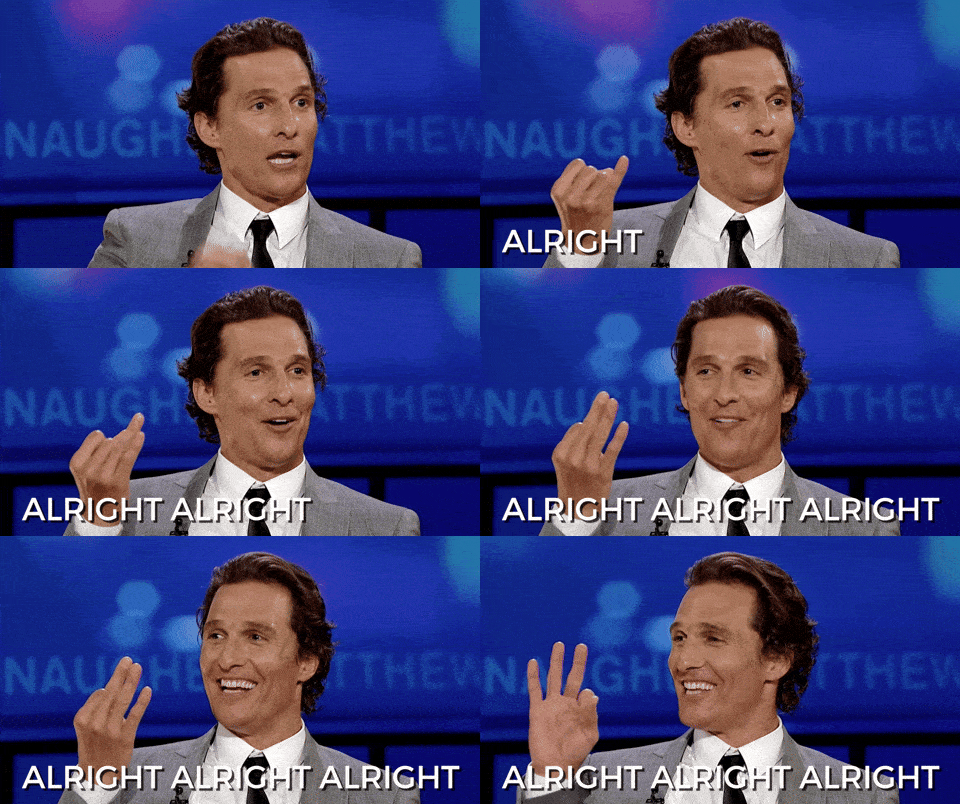
Rachel and I talked about this on our podcast when we brought up Matthew McConaughey and the way he approached AI. Instead of ignoring it or reacting emotionally, he moved early to protect his likeness and his voice so it would not be used without consent. He understood something simple and powerful.
Your voice is part of your identity, and if you do not define the boundaries around it, someone else will.
The same principle applies in business, even if it feels less dramatic. Your voice is often the clearest signal of how you think, it’s the extension of your leadership. There is a big difference between using AI to support your voice and letting it blur your voice into something generic. When too many leaders rely on default outputs, everything starts to sound the same, and when everything sounds the same, trust starts to thin out.
Protecting your voice is not about fear, it’s about clarity, it’s about making sure that when people hear from you, they are actually hearing you. So if AI can sound very similar to you, then your advantage is no longer how polished your words are.
Your advantage becomes:
- Your lived story
- Your credibility
- Your humor
- Your scars
- Your pattern recognition
We are moving from a content economy to a credibility economy, and credibility is earned.
How Should Leaders Use AI Without Losing Their Voice?
You should use AI as a growth tool, not a replacement. AI should support your voice, not substitute for it. The goal is authentic human connection, not optimized production.
Here’s how I think about it:
🔵 Use AI to organize your ideas, but inject your own stories and lived experience.
🔵 Let AI help you brainstorm, but keep your humor, regional references, and personality intact.
🔵 Never publish something that sounds more corporate than you would say out loud.
🔵 Focus on starting real conversations, not scaling automated outreach.
🔵 Measure success by trust and opportunity, not just impressions and reach.
AI can help you do more in less time, but the ‘being you’ part will always still be on you.
What Does This Mean for Leaders Right Now?
It means the responsibility of leadership just increased. If AI can generate content at scale, then the real differentiator is no longer production. It’s the ability to stand behind your words when decisions carry weight. A leader’s voice is not valuable because it sounds polished, it’s valuable because it reflects lived experience, pattern recognition, and accountability. Your team does not follow you because your sentences are optimized, they follow you because they trust how you think.
AI can support your communication, it can help you move faster, it can help you organize your ideas. What it cannot do is replace the lived authority that comes from carrying responsibility over time. In this era, leadership is not about being louder, it’s about being unmistakable. Owning your voice means building credibility that cannot be replicated.
That means the question is no longer whether AI can sound like you. The question is whether your voice is distinct enough, grounded enough, and aligned enough that no one could confuse it for anything else.
How Can Standout Authority Help You Become the Trusted Answer?
At StandOut Authority, we help founders, executives, and creators build brands that AI and humans both trust. We don’t just build and expand your voice, we assemble it. We align your content with your identity, and we build systems that train AI to recognize you as the answer, not just another expert in the feed.
If you want to be seen, remembered, and recommended (not just clicked) our LinkedIn Brand LaunchPad is where it starts. If you’re ready to build a personal brand that doesn’t just get noticed but is chosen by AI search then click the link ☝️and book a call with me to see if you qualify.

Is Working with Your Partner a Power Move or a Risk?
Building a business with your spouse can be one of the most aligned moves you ever make, or it can quietly strain the very relationship you are trying to protect. The difference is not love, its clarity, communication, and boundaries.
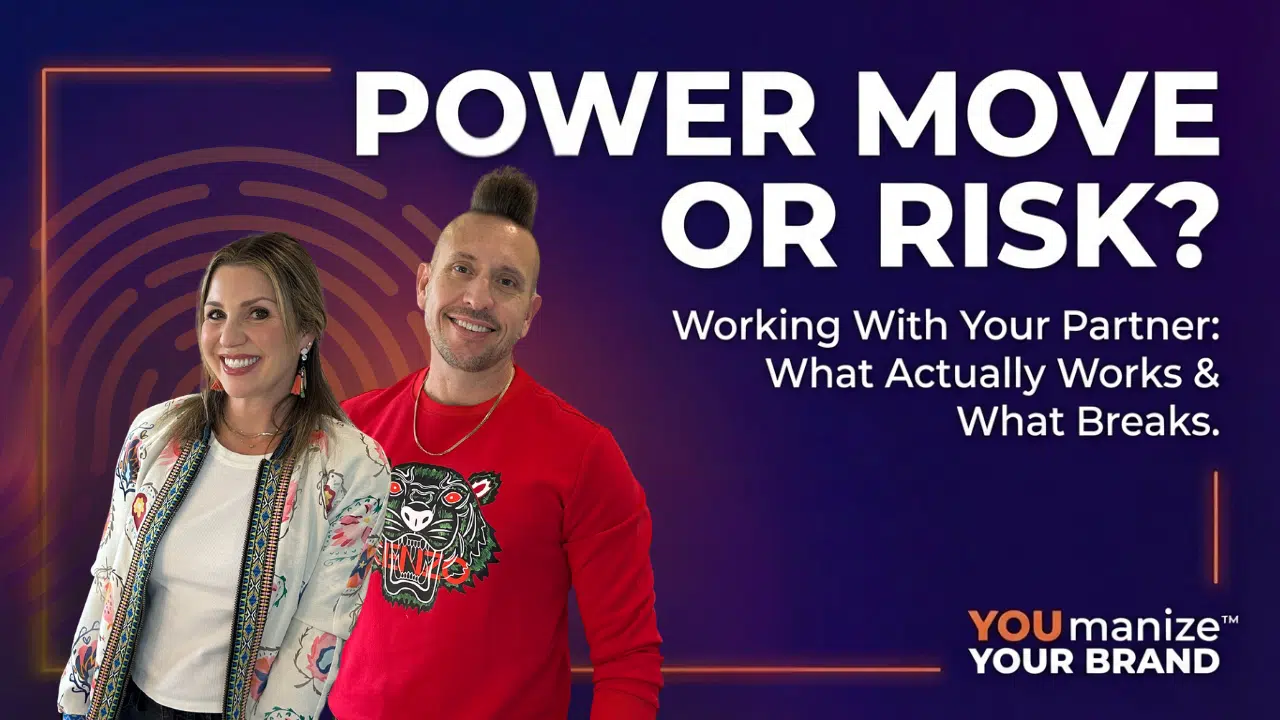
In this episode, Rachel B. Lee and I share what it has actually taken to grow Standout Authority together, from leaving Gartner to navigating power dynamics, money pressure, parenting collisions, and defining the difference between “partner” and “spouse.”
This is not a polished social media version of entrepreneur marriage. It is an honest conversation about what works, what breaks, and how to protect both the business and the relationship. 🔵 The newest episode of YOUmanize™ Your Brand is live now.
👉 Watch on YouTube and join the conversation.