
The one trait every standout LinkedIn brand will share in 2026 is TRUST. More specifically, it is the ability to consistently build emotional trust through a clear voice, human presence, and aligned content, even as automation and AI become more common.
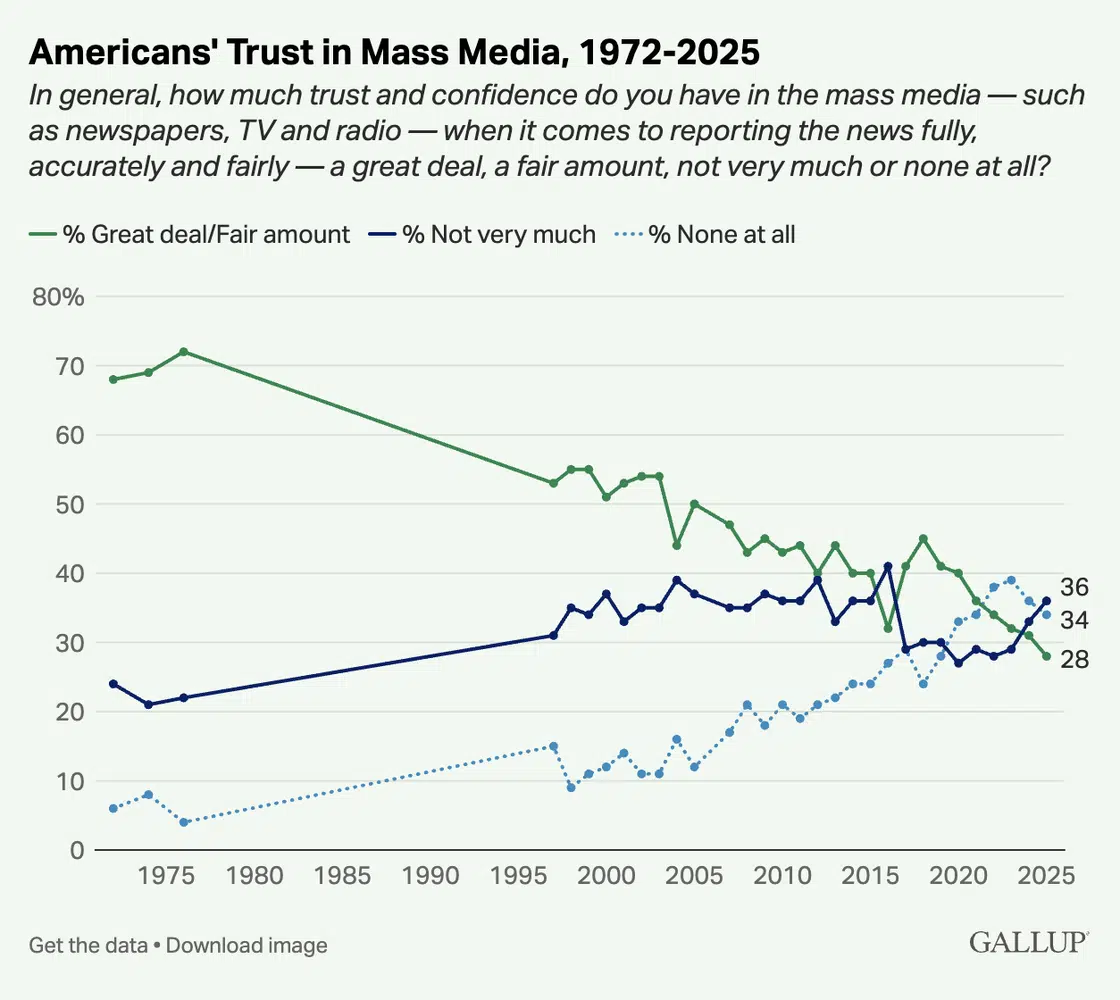
I came across a statistic that reinforced why this matters, only 28% of Americans say they trust the media today. While that figure is often tied to news, the impact stretches across the entire digital landscape. It affects how people consume content, evaluate credibility, and decide which voices are worth listening to online.
As a result, people are no longer choosing content based on visibility alone, they are choosing based on belief. In a recent episode of YOUmanize™ Your Brand, Rachel and I had an unscripted conversation about trust, alignment, and where personal branding quietly goes wrong as we head into 2026. It wasn’t tactical. It was about how trust is built, how misalignment erodes credibility, and why AI is speeding all of that up.
One question stayed with me: would the people closest to you believe what you put online? As automation increases and trust declines, this feels like the question more leaders need to sit with.
Why Is Trust More Important Than Reach in 2026?
Trust matters more than reach in 2026 because visibility without credibility does not lead to influence or connection. People may see your content, but without trust, it does not stick or lead to action.
On LinkedIn, this shift is already obvious. Content volume is high, but attention is selective. Audiences are overwhelmed by generic messaging and automated posts that lack a clear human presence. What resonates now is content that feels intentional, grounded, and connected to a real person.
Reach may get you noticed once; trust is what brings people back.
Google’s research on the Zero Moment of Truth shows that it takes an average of 11 touchpoints before someone trusts you enough to take action. That means trust is built gradually, through repeated exposure, not through a single post or moment of visibility.
Your LinkedIn content plays a role in those moments, but only when it actually sounds like you and reflects something people can recognize and remember. The difference between posts that disappear and posts that lead to real opportunities is not reach or timing. It’s whether your perspective stays with someone after they scroll past. When your expertise is clear, human, and consistent, it doesn’t just get seen, it gets remembered.
Is Scaling Content Still a Smart Strategy in 2026?
Scaling content is only effective in 2026 if trust is scaled alongside it. Posting more without strengthening credibility often weakens a brand rather than growing it. Many leaders assume that consistency means frequency, but consistency is really about alignment. When content increases without a clear voice or purpose, it blends into the background. Thoughtful content that reflects a distinct perspective builds authority even at a lower volume. The goal is not to post more, the goal is to show up more clearly.

How Does AI Impact Personal Branding and Trust?
AI impacts personal branding by increasing efficiency, but it cannot replace authenticity or emotional connection. Used correctly, AI supports your voice, used incorrectly, it flattens it.
I am very open about the fact that I love AI and use it often. It helps with ideation, drafting, and execution. However, AI does not carry lived experience, nuance, or values. When leaders rely on automation without grounding it in who they are, the result is content that feels technically fine but emotionally empty. In a low trust environment, emotional clarity is everything.
Why Is Trust in Digital Content So Low Right Now?
Trust in digital content is low because confidence in media and online information has steadily declined over time. This has reshaped how people interpret everything they see online. Decades ago, most Americans trusted the news, today, fewer than 1 in 3 do. That erosion of trust has carried over into social platforms and branded content. As a result, credibility is no longer assumed. It must be built intentionally through consistency, transparency, and presence. This is why who you are matters just as much as what you publish.
What Traits Will Standout LinkedIn Brands Share in 2026?
Standout LinkedIn brands in 2026 will share 3 traits:
👉 Voice ownership
👉 Strategic imperfection
👉 And scalable authenticity
Voice ownership means having a clear perspective and values that guide your content. Strategic imperfection means allowing space for honesty and humanity rather than hiding behind polish. Scalable authenticity means building systems that support your identity instead of diluting it as you grow. Together, these 3 traits create content that feels human, trustworthy, and consistent over time.
Why Is LinkedIn a Credibility Platform?
LinkedIn is a credibility platform because people use it to decide who they trust professionally. It is no longer just a place to publish content. Audiences are forming opinions long before conversations happen. Your posts, comments, and presence all contribute to how you are perceived. Whether you realize it or not, your content is speaking for you when you are not in the room. This makes clarity and alignment more important than ever.
Why Does YOUmanize™ Matter in 2026?
YOUmanize™ matters because it helps leaders maintain trust and presence in an increasingly automated digital world. It ensures that content reflects the person behind the brand, not just the output of a system. This approach is not about rejecting AI, it’s about leading with intention. YOUmanize™ helps turn visibility into connection and connection into credibility by keeping the human at the center of the strategy.
In a year where tools are accessible to everyone, your humanity becomes the advantage.
What Should Leaders Focus on Building Moving Into 2026?
Leaders should focus on building clarity, consistency, and trust rather than chasing reach or frequency. These elements create long-term credibility.
I am open about the topics that matter to me, including AI, leadership, trust, mental health, and building a blended famiLEE while growing a business with my wife and partner, Rachel Lee . That openness is not a tactic, it is alignment. And alignment is what audiences respond to when trust is scarce. The brands that last will not be the loudest, they will be the ones people trust.
How Can You Build a Trust Led LinkedIn Brand Now?
You build a trust led LinkedIn brand by clarifying your voice and aligning your content with who you are. That is the foundation of everything that works long-term. If this resonated with you, I would genuinely love to hear what you are doing right now to build trust in your leadership and content. And if you are ready to build a LinkedIn presence that reflects who you really are, that is exactly the work we do inside LinkedIn Brand LaunchPad.
No pressure. No noise. Just a real conversation.

🔵 For leaders who don’t want to play catch up.
🔵 For people who want to lead AI, not fear it.
🔵 For professionals ready to build a personal brand that multiplies their visibility, their voice, and their impact.
We’ve opened up 5 new spots for Q1 2026. If you’re ready to stop blending in and finally take control of your narrative, let’s talk. I’ve also put together a FREE guide to help you tap into LinkedIn’s hidden algorithm, the same one elite execs use to get found by the right people (without posting every day).